
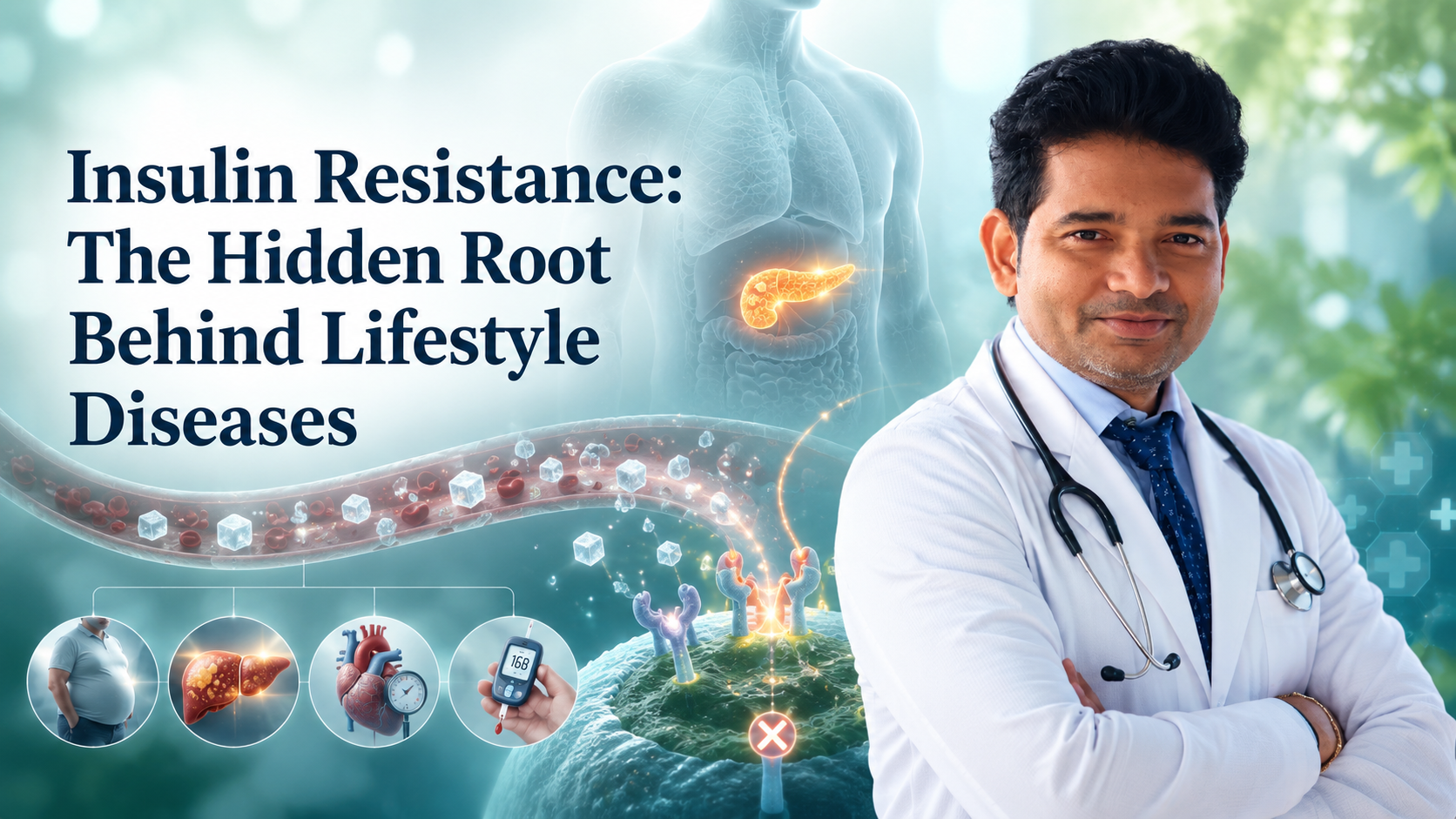
Insulin Resistance: The Hidden Root Behind Most Lifestyle Diseases
Why Treating Sugar Alone Is Not Enough
A patient walks into the clinic with many reports in hand.
His fasting sugar is high.
His triglycerides are high.
His blood pressure has started rising.
The ultrasound says “fatty liver.”
His weight is increasing, especially around the belly.
He feels tired after meals, sleepy in the afternoon, hungry again and again, and mentally dull.
He thinks he has five different problems.
Get health insights in your inbox
Weekly evidence-based tips on diabetes reversal and metabolic health. Unsubscribe anytime.
But when we look deeper, we often find one common root behind them: insulin resistance.
This is why many lifestyle diseases do not begin suddenly. They grow silently for years. First the body becomes resistant to insulin. Then the blood sugar rises. Then fat starts collecting around the liver and abdomen. Then cholesterol, blood pressure, hormones, inflammation, and energy levels begin to go out of balance.
In modern medicine, we should not only ask, “How do we reduce sugar?”
We must ask a deeper question:
Why did the body lose its ability to handle sugar in the first place?
That answer often begins with insulin resistance.
What Is Insulin Resistance?
Insulin is a hormone made by the pancreas. Its main job is to help glucose enter the cells so the body can use it as energy.
After we eat, especially foods rich in sugar, refined carbohydrates, or starch, glucose rises in the blood. The pancreas releases insulin. Insulin works like a key. It opens the door of the cells and allows glucose to enter.
But when a person eats too frequently, consumes excess refined carbohydrates, sleeps poorly, remains inactive, gains belly fat, lives under stress, or has chronic inflammation, the cells slowly stop responding properly to insulin.
This is called insulin resistance.
The pancreas then produces more insulin to push glucose into the cells. For some time, blood sugar may still look normal in reports. But inside the body, insulin levels are already high. This stage can continue silently for years before diabetes is diagnosed.
That is why insulin resistance is dangerous.
It does not always announce itself early through sugar reports.
It first shows itself through belly fat, cravings, tiredness, fatty liver, high triglycerides, PCOS, blood pressure, skin tags, sleepiness after meals, and low energy.
By the time blood sugar becomes high, the root problem may already be many years old.
Insulin Resistance Is Not Just a Sugar Problem
Many people think insulin is only related to diabetes. That is a very incomplete understanding.
Insulin affects fat storage, liver function, hunger, cholesterol metabolism, blood vessels, inflammation, kidney function, and even reproductive hormones.
When insulin resistance develops, the body enters a state of metabolic confusion.
The person may eat food, but the cells do not receive energy properly.
So the body asks for more food.
The person feels hungry again.
The liver starts producing more fat.
The belly grows.
Triglycerides rise.
Good cholesterol may fall.
Blood pressure may increase.
Inflammation increases.
Hormonal imbalance begins.
This is how one root problem slowly becomes many diseases.
How Insulin Resistance Leads to Type 2 Diabetes
Type 2 diabetes usually does not begin on the day sugar becomes high.
It begins much earlier.
In the early stage, the cells resist insulin. The pancreas works harder and produces more insulin. This extra insulin keeps blood sugar controlled for some time. But the cost is high. The pancreas is under pressure every day.
After years of overwork, the pancreas may not be able to keep up. Then blood sugar starts rising. First it becomes prediabetes. Later it becomes type 2 diabetes.
So high sugar is not the first problem.
High sugar is often the late signal of a deeper metabolic problem.
This is why only reducing sugar numbers is not enough. If insulin resistance is not corrected, the disease process continues silently.
The real goal should be to improve insulin sensitivity — meaning the body should again respond properly to insulin.
How Insulin Resistance Causes Belly Fat and Obesity
Many patients say, “Doctor, I eat very little, but my weight is increasing.”
In many such cases, the issue is not only calories. It is also hormones.
Insulin is a storage hormone. When insulin remains high for long periods, the body gets a strong signal to store energy as fat, especially around the abdomen.
High insulin also makes it harder for stored fat to be released and used as energy. This is why some people feel stuck. They reduce food for a few days, but cravings increase, weakness comes, and weight returns.
When insulin resistance improves, the body slowly becomes better at using stored fat for energy. Hunger becomes more stable. Energy improves. Belly fat begins to reduce more naturally.
So obesity is not always a failure of willpower.
Often, it is a hormonal and metabolic imbalance.
How Insulin Resistance Leads to Fatty Liver
The liver is one of the first organs affected by insulin resistance.
When insulin levels stay high and the body receives excess refined carbohydrates, the liver starts converting extra glucose into fat. Over time, fat begins to collect inside the liver. This condition is commonly known as fatty liver.
A fatty liver is not just a liver problem. It is a sign that the whole metabolism is under stress.
Many people with fatty liver also have belly fat, high triglycerides, prediabetes, diabetes, or high blood pressure. These are not separate accidents. They are connected through the same metabolic pathway.
If we only give liver medicines but do not correct insulin resistance, the root remains active.
How Insulin Resistance Affects Cholesterol and Heart Risk
Insulin resistance can disturb the lipid profile.
It commonly increases triglycerides, lowers HDL, and contributes to unhealthy fat circulation in the blood. These changes increase the risk of plaque formation in blood vessels.
Over time, blood vessels become inflamed and damaged. Blood pressure may rise. The risk of heart disease and stroke increases.
This is why diabetes, high blood pressure, cholesterol problems, fatty liver, and heart disease are often seen together in the same person.
They are not isolated diseases.
They are different branches of the same unhealthy metabolic tree.
How Insulin Resistance Contributes to High Blood Pressure
High blood pressure is often treated only as a pressure problem. But in many patients, it is also a metabolic problem.
Insulin resistance can affect the blood vessels, kidneys, nervous system, and salt-water balance in the body. It may increase inflammation and make blood vessels less flexible.
When blood vessels become stiff and the body holds more fluid, pressure rises.
This is why a person with belly fat, high sugar, high triglycerides, and fatty liver often develops high blood pressure too.
Again, the root is connected.
Insulin Resistance and PCOS
In women, insulin resistance is strongly linked with PCOS.
High insulin can disturb ovarian hormone balance. It may increase androgen levels, which can lead to irregular periods, acne, facial hair growth, weight gain, and difficulty in conception.
This is why PCOS is not only a gynecological issue. In many cases, it is also a metabolic issue.
Treating only the periods without correcting insulin resistance may give temporary relief, but the deeper imbalance can continue.
A proper PCOS approach must include food correction, movement, sleep, stress management, weight management if needed, and medical guidance.
The Lifestyle Disease Tree
Imagine a tree.
The branches are:
Type 2 diabetes
Obesity
Fatty liver
High blood pressure
High triglycerides
Low energy
PCOS
Sleep problems
Heart disease risk
Chronic inflammation
Many people try to treat each branch separately.
One tablet for sugar.
One tablet for pressure.
One tablet for cholesterol.
One syrup for liver.
One supplement for weakness.
One diet for weight loss.
But unless we look at the root, new branches keep growing.
For many lifestyle diseases, one major root is insulin resistance.
This does not mean insulin resistance is the only cause of every disease. Genetics, age, stress, environment, infections, sleep, toxins, and other medical conditions also matter.
But insulin resistance is one of the most important and most ignored root causes of modern lifestyle illness.
Why Reports Can Be Misleading in the Early Stage
A person may say, “My sugar is normal, so I am healthy.”
But fasting sugar and HbA1c can remain normal for years while insulin levels are already high.
The body may be maintaining normal sugar by producing extra insulin. This is like a worker doing double duty every day. From outside, the factory looks normal. But inside, the system is overloaded.
Early warning signs may include:
Belly fat
Sleepiness after meals
Frequent hunger
Sugar cravings
Skin tags
Dark patches around the neck
Fatty liver
High triglycerides
Low HDL
High waist size
PCOS symptoms
Borderline blood pressure
Family history of diabetes
These signs should not be ignored.
They are the body’s early warning signals.
Can Insulin Resistance Be Reversed?
In many people, insulin resistance can improve significantly with the right lifestyle and medical approach.
The body is not a machine that breaks suddenly. It is a living system. When we remove the causes that created insulin resistance, the body often begins to heal.
The most powerful tools are:
1. Correct Food
Food is the first medicine for insulin resistance.
The goal is not starvation. The goal is hormonal balance.
A good food plan should reduce refined carbohydrates, sugar, processed foods, deep-fried foods, sugary drinks, and frequent snacking. It should include enough protein, fiber, healthy fats, vegetables, and natural whole foods.
The right diet keeps glucose and insulin spikes lower and gives the pancreas rest.
2. Proper Meal Timing
Eating again and again keeps insulin active throughout the day.
For many people, reducing unnecessary snacking and maintaining proper meal gaps can help insulin levels come down. This should be done carefully, especially in people taking diabetes medicines or insulin.
3. Movement After Meals
A simple walk after meals can improve glucose handling. Muscles are powerful glucose users. When muscles move, they can absorb glucose better.
Exercise is not only for weight loss.
Exercise is medicine for insulin sensitivity.
4. Strength Training
Muscle is a metabolic organ.
The more healthy muscle a person has, the better the body can use glucose. Strength training, resistance exercise, yoga, and functional movements can improve insulin sensitivity.
5. Sleep Correction
Poor sleep increases hunger hormones, stress hormones, cravings, and insulin resistance.
Many people focus only on diet but ignore sleep. That is a mistake. Sleep is a metabolic treatment.
6. Stress Management
Chronic stress increases cortisol. High cortisol can raise blood sugar, increase cravings, disturb sleep, and worsen belly fat.
Breathing practice, prayer, meditation, nature walks, emotional healing, and proper routine can help the nervous system settle.
7. Medical Monitoring
Lifestyle is powerful, but medicines should not be stopped suddenly.
Patients taking diabetes, blood pressure, thyroid, or heart medicines must work with a qualified doctor. As insulin resistance improves, medicine requirements may change. This should be monitored safely through reports and medical supervision.
The Goal Is Not Just “Normal Sugar”
The goal is deeper.
Stable energy.
Reduced hunger.
Better sleep.
Lower belly fat.
Improved liver health.
Better triglycerides.
Better blood pressure.
Improved insulin sensitivity.
Reduced inflammation.
Less medicine dependency where medically possible.
Better quality of life.
A truly healthy person is not someone whose report is normal because of increasing medicines alone. A truly healthy person is someone whose body is becoming metabolically stronger from inside.
A Doctor’s Message
Most lifestyle diseases do not start in the hospital. They start in the kitchen, in the sleep cycle, in the stress pattern, in the daily routine, in the chair where we sit too long, and in the repeated glucose-insulin spikes that happen silently every day.
The good news is that the same place where the disease begins is also the place where healing can begin.
When food changes, insulin changes.
When movement changes, muscles change.
When sleep changes, hormones change.
When stress changes, inflammation changes.
When routine changes, metabolism changes.
Insulin resistance is not a life sentence. It is a warning signal.
If we listen early, we can prevent disease.
If we act consistently, we can reverse the direction of disease.
If we treat the root, the branches begin to improve.
That is the future of lifestyle medicine.
Not just treating disease after it appears.
But correcting the root before it becomes irreversible.
The body is always trying to heal.
Our job is to remove the obstacles.
DAIREV Editorial Team
Health and wellness content by the DAIREV medical editorial team.
Related Articles
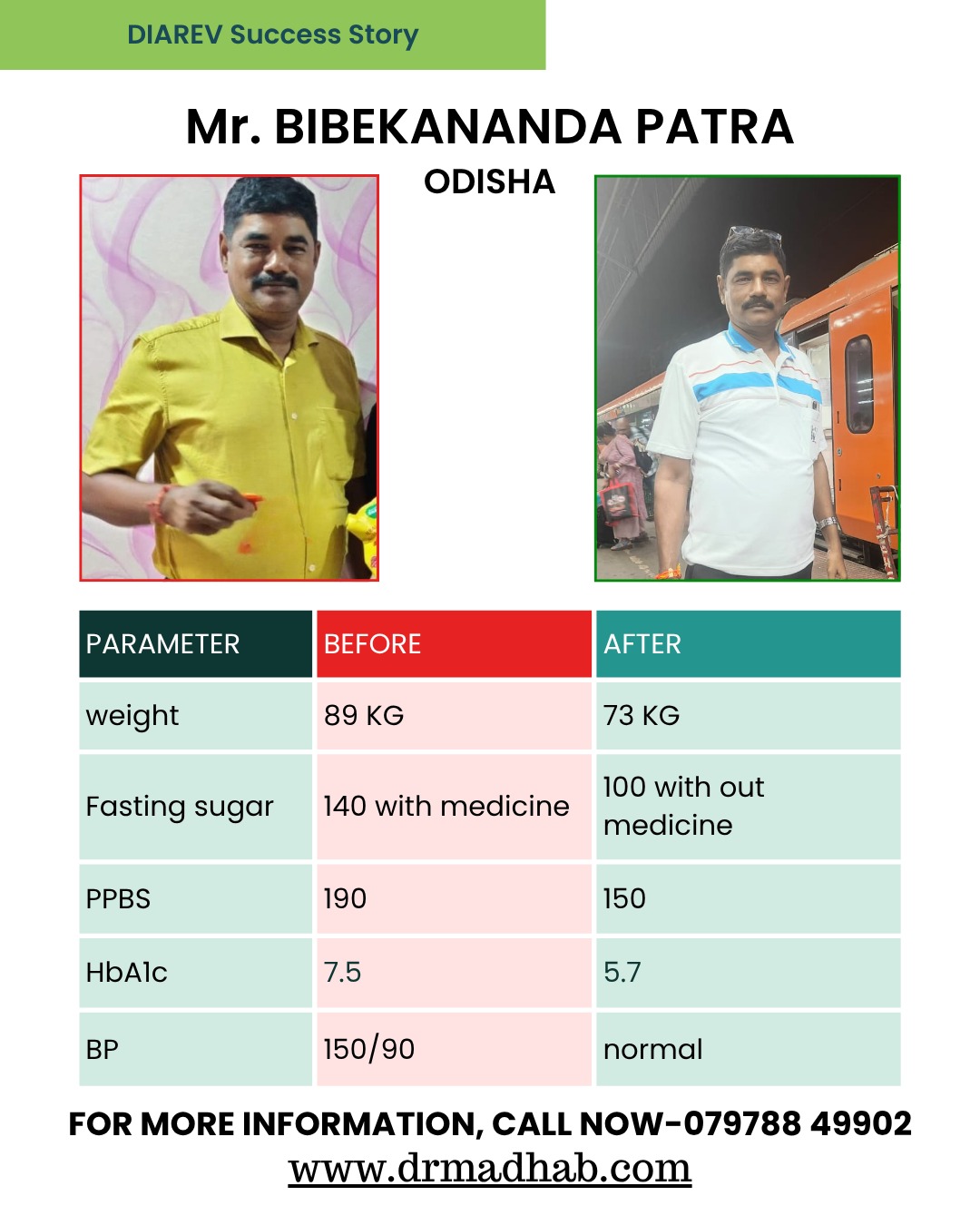
How Lost 16 Kg & Reversed Diabetes
Discover how Mr. Bibekananda Patra successfully reversed his diabetes markers and lost 16 kg through lifestyle modifications and medical guidance with DIAREV.
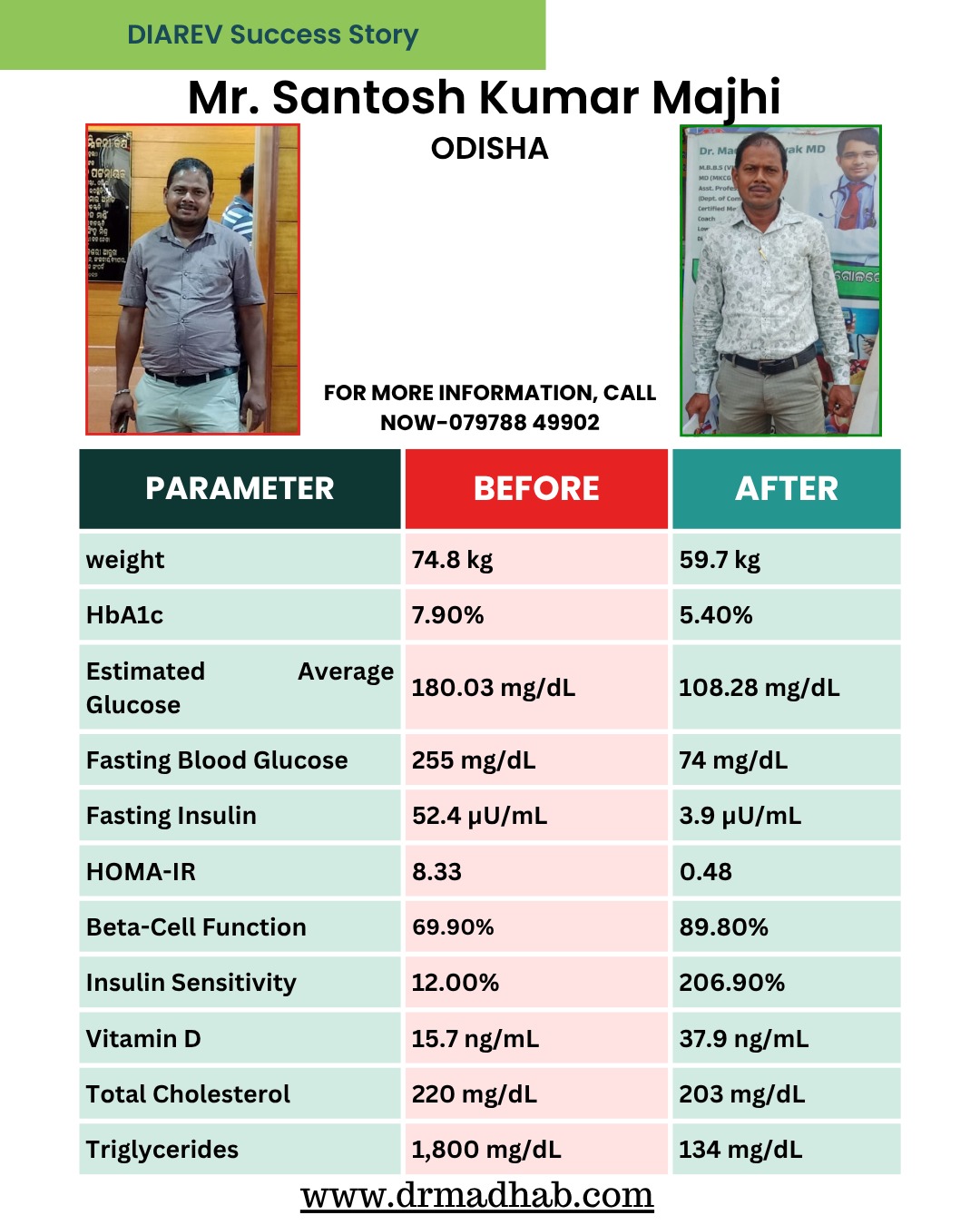
From Struggling with High Blood Sugar to a Remarkable Metabolic Health Transformation:
From Struggling with High Blood Sugar to a Remarkable Metabolic Health Transformation
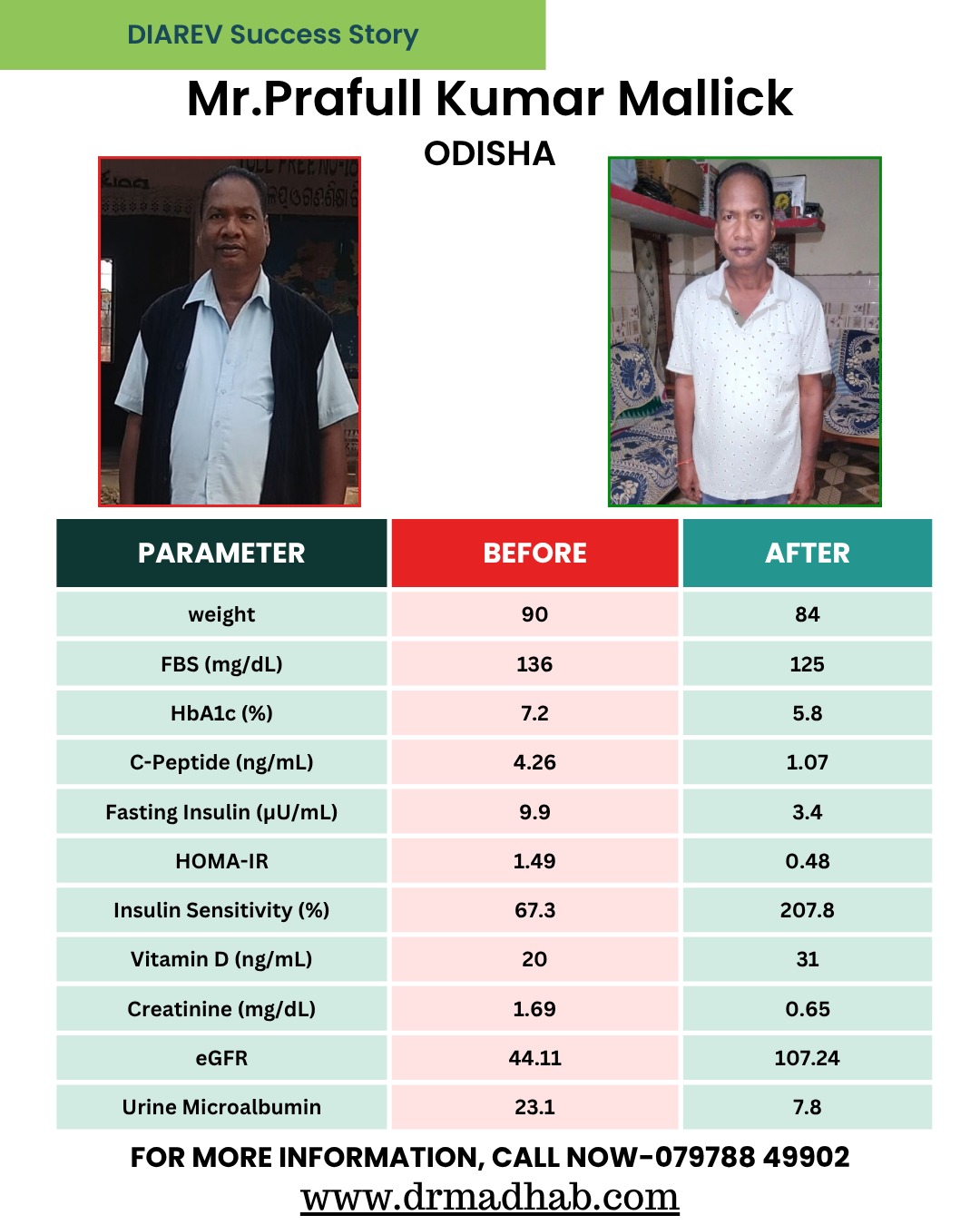
Yes Serum Creatinine Can be Reduced with DIAREV Protocol
Mr. Prafull Kumar Mallick reversed his metabolic markers with DIAREV, dropping HbA1c from 7.2% to 5.8%, weight from 90 to 84 kg, and improving kidney function with eGFR rising from 44.11 to 107.24.